
A Comprehensive Guide to Reading Japanese Menus
0
When it comes to dining in Japan, the experience extends beyond just the taste of the food. The intricate and diverse world of Japanese cuisine…

Osechi Ryori is an Oshogatsu New Years Day tradition celebrated across Japan.
These neatly packed, colorful food boxes are not only pretty – they’re an important part of wishes and prayers for the New Year.
The food is prepared in advance, so read on to impress your Japanese friends and get prepared for the most important New Year’s symbol of Japan – the seasonal feast!
Many countries have traditional food they eat for the holidays, but Japan takes New Year cuisine to new heights.
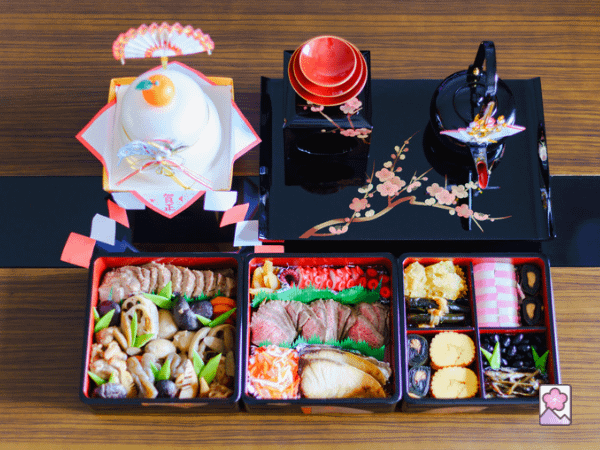
Roughly translated as “seasonal feast”, osechi ryori (お節料理) is a set of dishes with strong symbolism, representing good wishes and hopes for the New Year.
It’s often simply shortened to osechi (ryori simply means food or cuisine).
Neatly packed in tiered boxes, osechi is a colorful tradition that brings families together. A few days from the morning on New Year’s Day, the family eats together, sharing both the osechi foods and the wishes these symbolize. It also allows home cooks to rest for a few days, as Japanese habitually avoid any type of housework on the first three days of the New Year.
It may not be the most delicious of Japanese cuisine, but it’s among the most meaningful and has a tradition almost a millennium old. Each and every ingredient packed in the box has its own meaning and represents a wish for good health, long life, wealth, a successful lineage, or protection.
Learn more about Japanese New Year traditions.
Osechi ryori is not for family members only – the food is also shared with the gods.
Specifically, the Shinto deity Toshigami, once god of the harvest and now god of the yearly cycle, is believed to visit people’s homes in the first few days of the New Year.
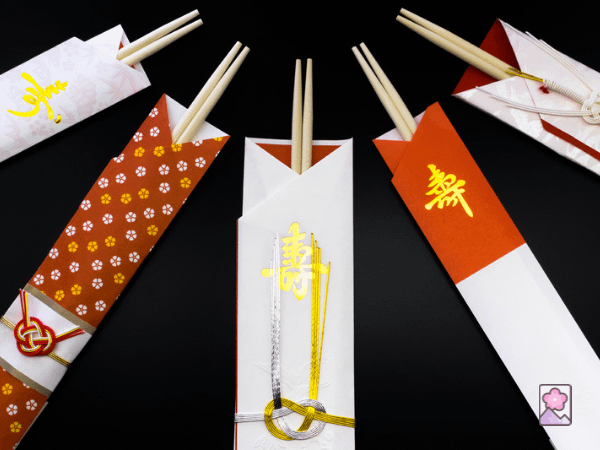
Along with deep-cleaning the home and setting up religious decorations, Japanese people prepare many kinds of food as offerings for the Toshigami, a tradition made complete with suitable chopsticks.
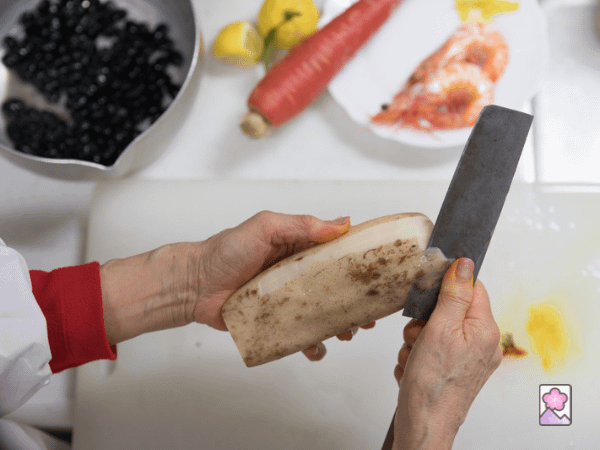
 Osechi ryori preparation contains a lot of vegetables – so a nakiri knife is a perfect choice!
It’s a special occasion, so it just doesn’t feel right to use your regular Japanese chopsticks. Instead, use the special celebratory chopsticks – iwai-bashi.
Tapering at both ends, iwai-bashi are made so you can use both sides for eating – yet that’s considered bad manners! In fact, you should use one side to eat, keeping the other side clean for the gods to eat with. By using double-sided chopsticks, the pious offer deities their osechi food, receiving blessings in return!
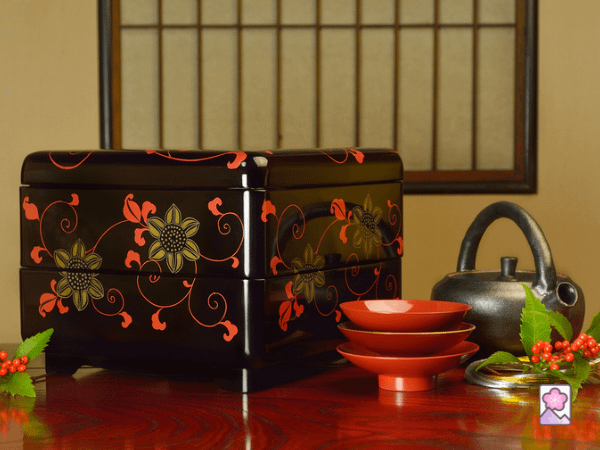
Osechi is rarely served on platters – instead, traditional lacquered lunch boxes are used for maximum convenience and aesthetics!
Staked on top of another, the tiered boxes usually come in 3 or more levels. It keeps your food safe from dirt and dry air, helping your osechi ryori stay fresh for longer.
However, since the boxes are lacquered, they’re not suitable for hot food. Luckily, osechi dishes are all served at room temperature.
There are no strict rules, but in general:
When arranging your osechi, follow the basic rules of moritsuke. For example, even numbers are considered unlucky, so make sure there’s an odd number of each ingredient. However, that’s just for show – usually another “invisible” piece is put underneath food to lift it up – to create the neat illusion that all food is at the same height.
Of course, you can replace the food that gets eaten or serve additional osechi food outside of the box – a single jubako is not enough for large families.
New Year holidays are, among other things, an opportunity for the chefs and the cleaners in the family to catch a break. After culminating the year with intense cleaning and cooking, almost no housework is done in the first couple of days of the New Year.
With the exception of two simple-to-make dishes: toshikoshi soba and ozoni soup.
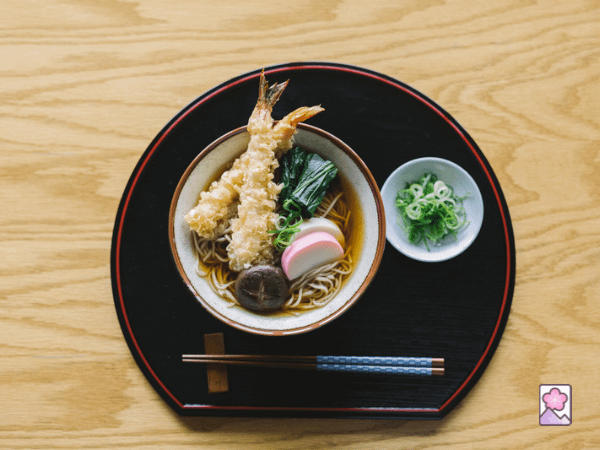
Literally translated as “Year-crossing noodles”, toshikoshi soba is a popular NYE dinner made to wrap up the preparations for the holidays. It’s the last dish cooked in Japanese kitchens of the year.
Soba are long and thin Japanese buckwheat noodles, and as such they symbolize a long life. It’s considered bad luck to leave your toshikoshi soba uneaten, so don’t make too much!
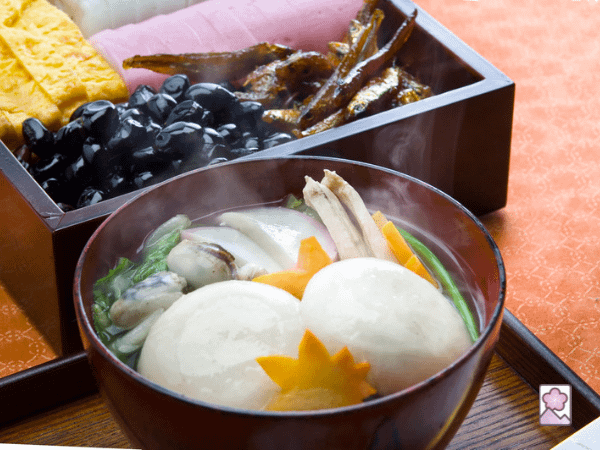
With a name that means “miscellaneous simmer”, ozoni is not a single dish, but rather an array of regional and home recipes for a savory soup with mochi (considered a holy food since old days) and vegetables.
People in Kyoto love their ozoni with white miso and round mochi. Kanto-style ozoni gets its umami flavor from the soy sauce soup and lightly toasted mochi. Whether it’s the clear broth of the east or the miso broth of the west, ozoni is a beloved first breakfast of the new year, an easy to cook meal that brings good health and a lot of luck.
These neatly packed boxes are painstakingly prepared in advance, so that the family always has quality food out during the holidays, without cooking.
In addition to being healthy, each dish included in an osechi box comes with its own meaning and represents a certain wish for the New Year. From the wish for many children, money, or health in old age, every New Year food comes with its own symbolism. There’s hundreds of possible ingredients and their respective meanings, so depending on availability and tastes of the family, every osechi dish comes with its own set of hopes and prayers.
We’ll cover the most common dishes, with a general outline for where each food should go in the box.
You already know that the Japanese flag is red-and-white, you may have noticed shrines and temples always decorated in this color scheme, or you may remember that I mentioned a “NHK Red and White Singing battle” in my previous blog. Here, you’ll notice red-and-white foods included in the box due to the color combination.
Red and white color scheme is a recurring theme in Japanese culture, and osechi ryori is no exception. So why is that?
Known as 紅白 (Kouhaku or kōhaku), red-and-white is considered an auspicious color combination. Just perfect for celebrations, prayers, and important symbols like the Japanese flag. Happy events like weddings, graduation ceremonies, and national holidays are marked with this color scheme. The decorative fabric panel used in most of those events is called kōhaku maku (紅白幕).
White is the color of purity, and red drives away evil spirits.
Red and white are also the go-to colors for teams in competitions (like we usually divide teams into red and blue), so Japan celebrates the end of the year with a “Red-and-white” singing competition on the TV.
You’ll see this auspicious color combination in your osechi ryori box too – in iconic foods like fish cakes and a salads.
Fish cakes named Kamaboko come in white and pink (close enough to red), so naturally they’re an auspicious part found in many osechi boxes this season!
The broiled fish cakes are sliced into thin pieces and arranged in alternating order, to get a striped pink-and-white pattern. In addition to being a red-and-white favorite, kamaboko looks like the rising sun, reminiscent of the hatsuhinode, the first sunrise of the year.
Two types of beans can be found in osechi: the smaller soybean (kuromame), or the large broad beans (otafuku-mame, also known as the fava bean).
Both “mame” (bean in Japanese) are featured for their similarity to the phrase “mame ni hataraku” (まめに働く) – “to work diligently”. In an indirect way, it expresses the wish for good health and energy to do your work well the next year.
Otafuku mame, fava beans boiled until soft, bring double the fortune: in addition to the symbol “mame”, “otafuku” stands for “many fortunes, a lot of luck” – self-explanatory, isn’t it!
No matter how healthy or naturally flavorful, osechi box is not exactly filled with sweet treats. One of the few desserts you’ll find in the box is kuri kinton, candied chestnuts and sweet potato mash.
The treat represents gold or wealth – both because of its intense yellow (golden) color and the sound of the word (kin,金, means gold).
Kamaboko fish cake, kuromame black bean, and kurikinton candied chestnuts are found in nearly all osechi ryori boxes across the country.
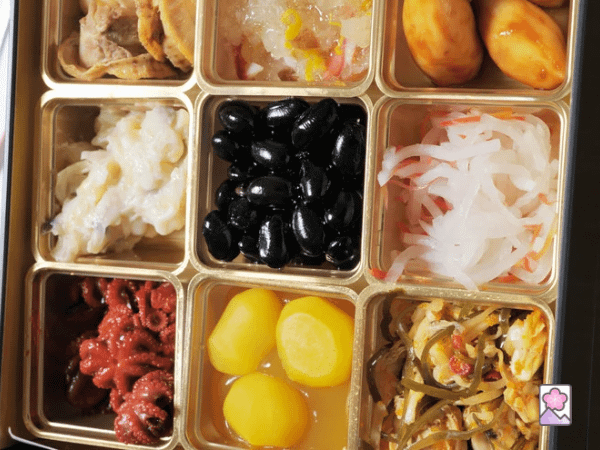
It’s simply kombu seaweed tied into a ribbon shape; or fish wrapped in the seaweed and tied with a piece of kanpyogourd.
The food is considered lucky thanks to the similarity between the word “kombu” with “yorokobu” (meaning – joy). If this dish is made with herring, “nishin”, the word can be understood as “two parents”, symbolizing longevity in the family.
Eggs mixed with mashed shrimp or fish paste, made into an omelette and then rolled and cut – this delicious roll represents a scroll, symbolizing knowledge and learning, a wish for academic success.
Tazukuri, dried or candied sardines or anchovies, is an old-school osechi dish. It has a long shelf life, so it’s often made first.
In the past, the fish was used to fertilize fields, hence the name of the dish means “rice paddy maker”. That’s why eating tazukuri symbolizes a wish for a bountiful harvest and prosperity in the coming year.
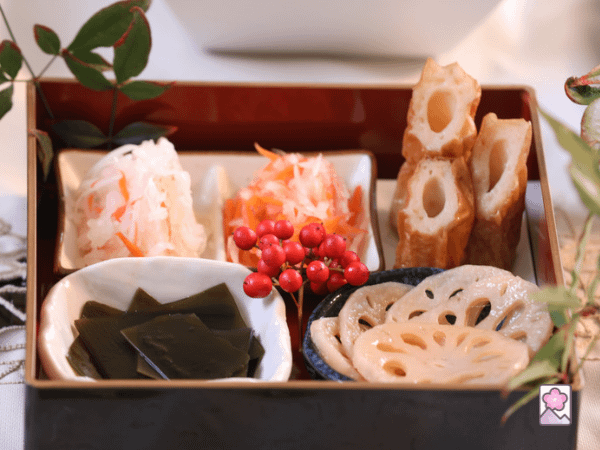
This salad is made for its auspicious color combination: it’s essentially just cut or grated daikon radish (white) and carrot (Japanese carrots have a deep red color), slightly pickled in vinegar and yuzu (citrus) rind.
Just like other roe, herring roe has a unique texture that pops between your teeth, so kazu-no-ko is many people’s favorite. The translation of the food’s name is “numerous children”, and it represents a wish for many children and a long family lineage.
Throughout history and especially before sugar was introduced to Japan, dried persimmons used to be the most popular type of candy. The intensely sweet dry fruit doesn’t look particularly appetizing, but once you try it, you’ll love it – like most of Japan does!
Due to its wrinkled surface, dried persimmons symbolize old age – and a wish for a long life.
Sometimes, they’re not included in the osechi box, but rather skewered on a stick and put up as a part of kagami-mochi– the edible decoration put up to welcome the Year God into your home.
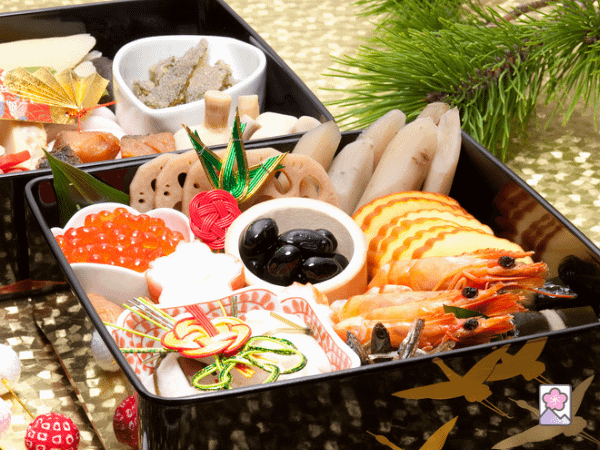
With their bent backs and long beards (whiskers), shrimp naturally symbolize old age. Cooked in soy sauce and absolutely delicious, the marine delicacy is a common choice for osechi ryori boxes: it represents a wish for a long life.
This tasty Japanese fish is served as an auspicious symbol for two reasons. One is its unusual red color, and you probably remember that the color red wards off evil. The other is that the Japanese word for sea-bream, tai, sounds similar to the word for celebration, omedetai (おめでたい).
Chrysanthemum is the national flower of Japan (along with sakura cherry blossoms), found on the imperial seal used by the Emperor and the 50-yen coin. Buddhists say it has a “powerful Yang energy”.
This symbol of a long life, rejuvenation, and good luck is found in the osechi box too. Well, not real flowers, but cleverly cut turnips or radishes that look just as lovely. Used fresh or pickled.
Pounded Burdock Root (たたきごぼう, Tataki Gobo)
Burdock roots grow deep, deep into the ground – and as such they’re considered a symbol of strength, stability, and good health. In a way, the burdock helps the family stay deeply rooted.
Cleverly made, this simple dish is made by separating the whites and yolks, strained, and then lightly steamed to get a two-color, usually checkered-design food. The yellow yolk symbolized gold and the white – silver, making layered eggs an overall symbol of wealth and financial fortune.
The bottom box of osechi is usually less intricately designed – instead, it holds a mixture of vegetables cooked in dashi, soy sauce, mirin, and sugar.
This one-pot veggie stew is usually called nishime (煮しめ) or chikuzenni (筑前煮), and it most frequently includes carrots (often cut into plum flower shapes, to wish for spring), lotus root, konjac, and arrowhead tubers.
With its many holes, lotus roots is a food you can see through. So, it’s eaten in hopes of a clear view of the future in the New Year.
While practically tasteless (apart from the seasoning included), lotus root has a strong, crunchy texture.
Strips of the jelly-like food is cut and folded into a shape that looks like reins – and symbolizes marriage ties.
Known as water chestnuts in the west and kuwai in Japan, arrowhead comes with delicious starchy roots. This wetland plant sprouts high up – symbolizing growth and success in new endeavors.
There are so many different dishes included in an osechi box, that it seems impossible to prepare it all at home. The truth is that few families prepare their osechi from scratch.
You can buy many of the dishes pre-made separately, or even purchase the entire osechi set – the average price is around 25,000 yen, but sets start at 10,000 yen.
However, if you have the time and resources, we’d suggest assembling your own osechi box – that way, you can pick and choose which dishes to include according to your personal wishes for the New Year, making the tradition ever more symbolic.
While many people start to work around the 4th of January, the celebration is not exactly over yet. There are more traditional foods to eat in early January!
After feasting for days, Japanese like to calm their stomach with a simple porridge made of seven early spring herbs cooked in a light broth: Japanese parsley, shepherd’s purse, cudweed, chickweed, nipplewort, turnip, and daikon radish.
It’s believed that eating the seven-herb porridge on the morning of the seventh day of the year will keep you healthy for the whole year to come!
On January 11th, we take the now dried, Toshigami-welcoming kagami-mochi (decorative rice cake) and break it in a ritual named kagami biraki.
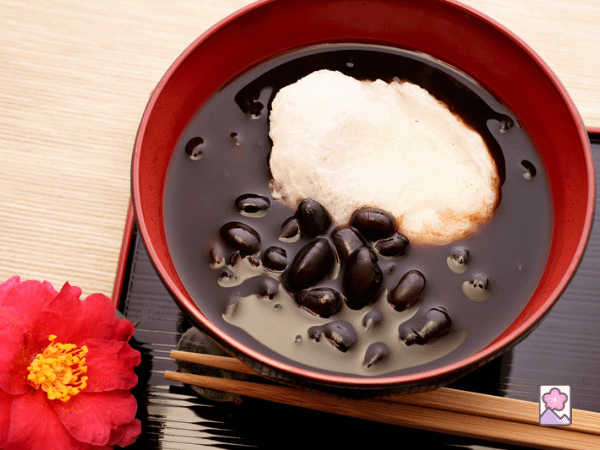
Since the mochi is quite dry, it’s not at its tastiest then. Japanese people like to eat it in zenzai, a unique sweet soup made of azuki beans and toasted mochi.
That’s a wrap – of this year, AND of the extensive list of most popular osechi ryori to eat this New Year. Hopefully, all of the symbolic foods you eat this season bring you good luck and make your wishes come true.
We wish you a wonderful holiday season and a tasty, tasty celebration!